
“The lesson is get the car ready very early and get out testing so you can get it reliable and get your drivers practising” - Willem Toet
Learn, Design, Build, Test.
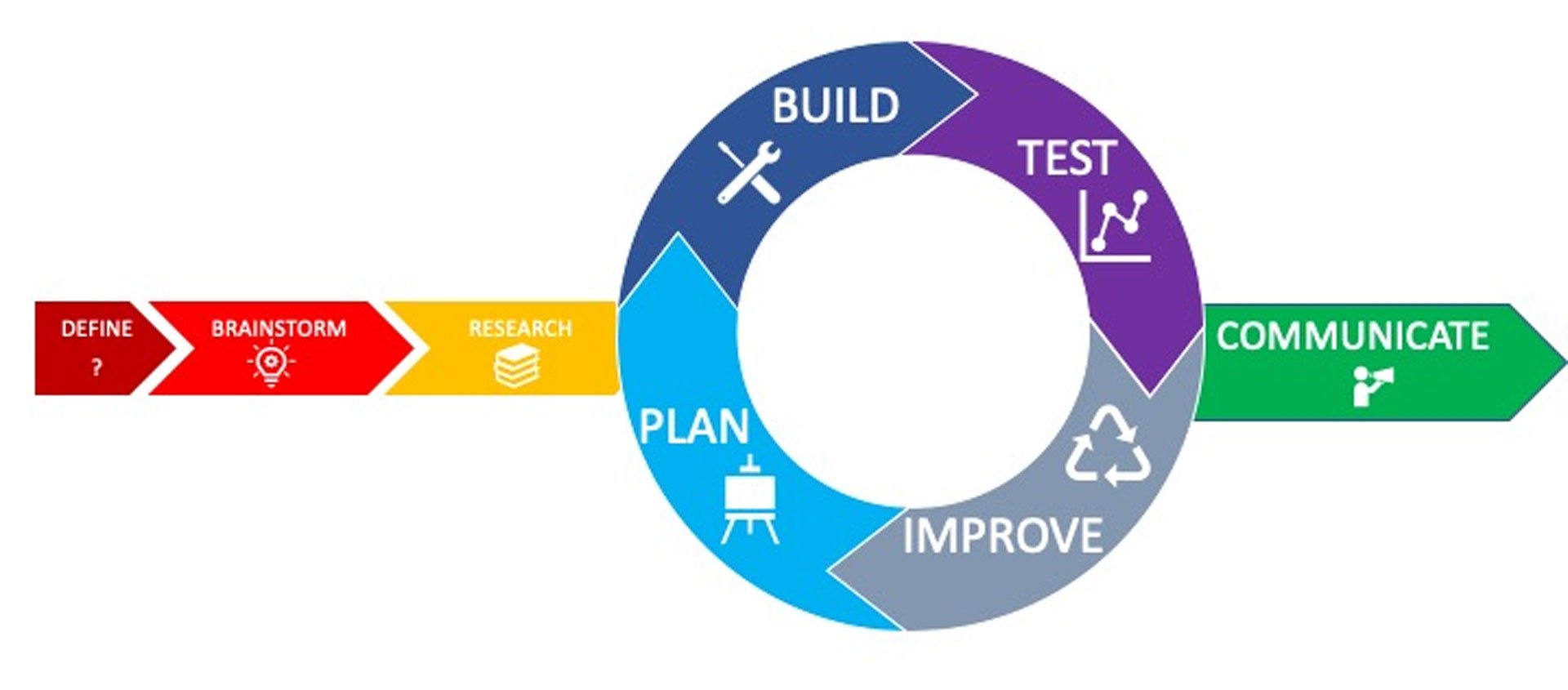
In Formula Student, it’s incredibly easy to get stuck in the first three phases of the engineering loop, but once the foundations are there, most of your performance lies in testing. Whether it’s understanding the car you’ve built, or teaching your drivers to find it’s limits, time on track translates directly to points at competition.
As part of the lead up to the 2026 Formula Student UK competition, we evolved our testing methodology to maximize our on-track time. Before competition, the team achieved over 700km of testing, with the test session highlighted below accounting for nearly 100km of that.
Setting the Foundation
In Formula Student, it’s incredibly easy to get stuck in the first three phases of the engineering loop, but once the foundations are there, most of your performance lies in testing. Whether it’s understanding the car you’ve built, or teaching your drivers to find it’s limits, time on track translates directly to points at competition.
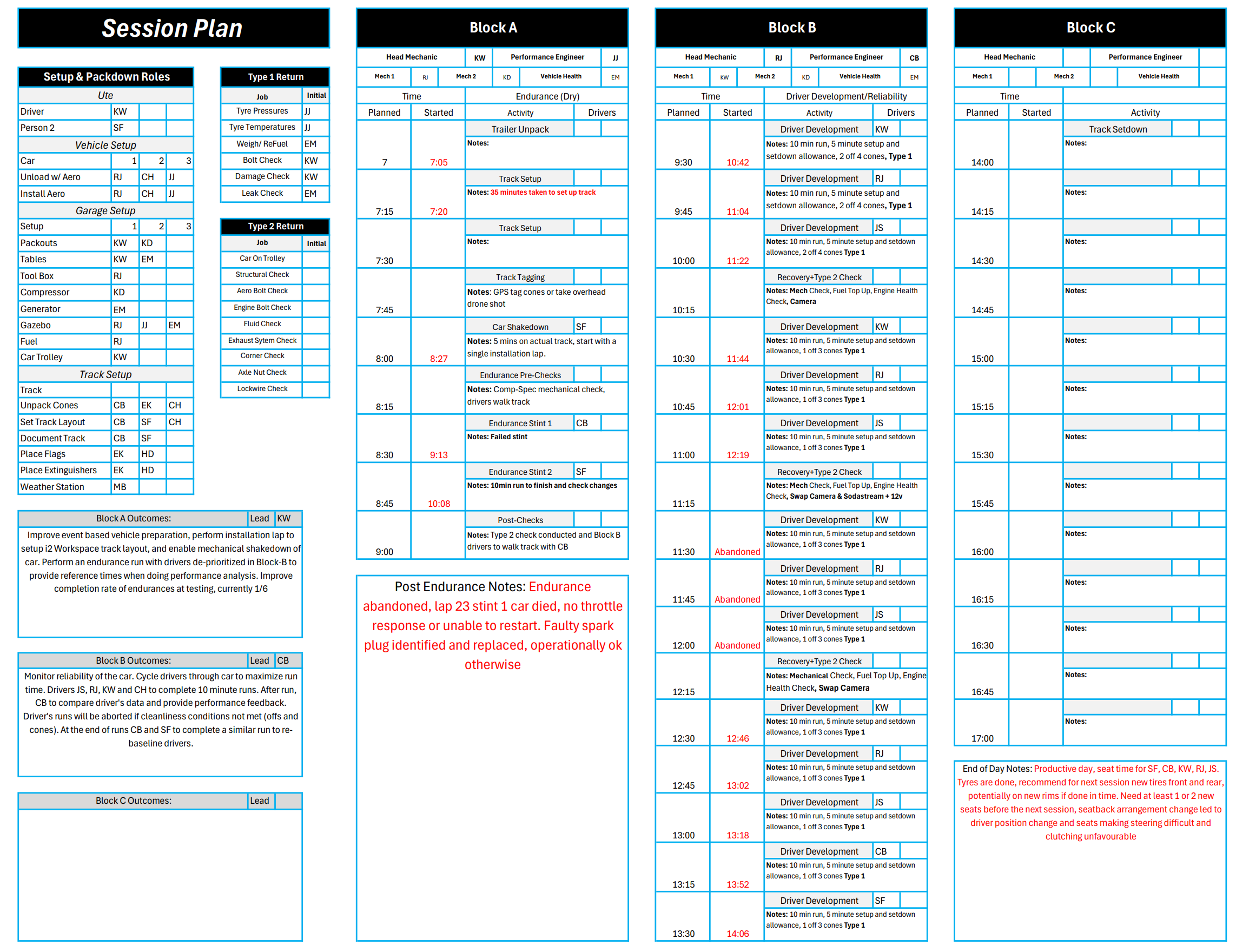
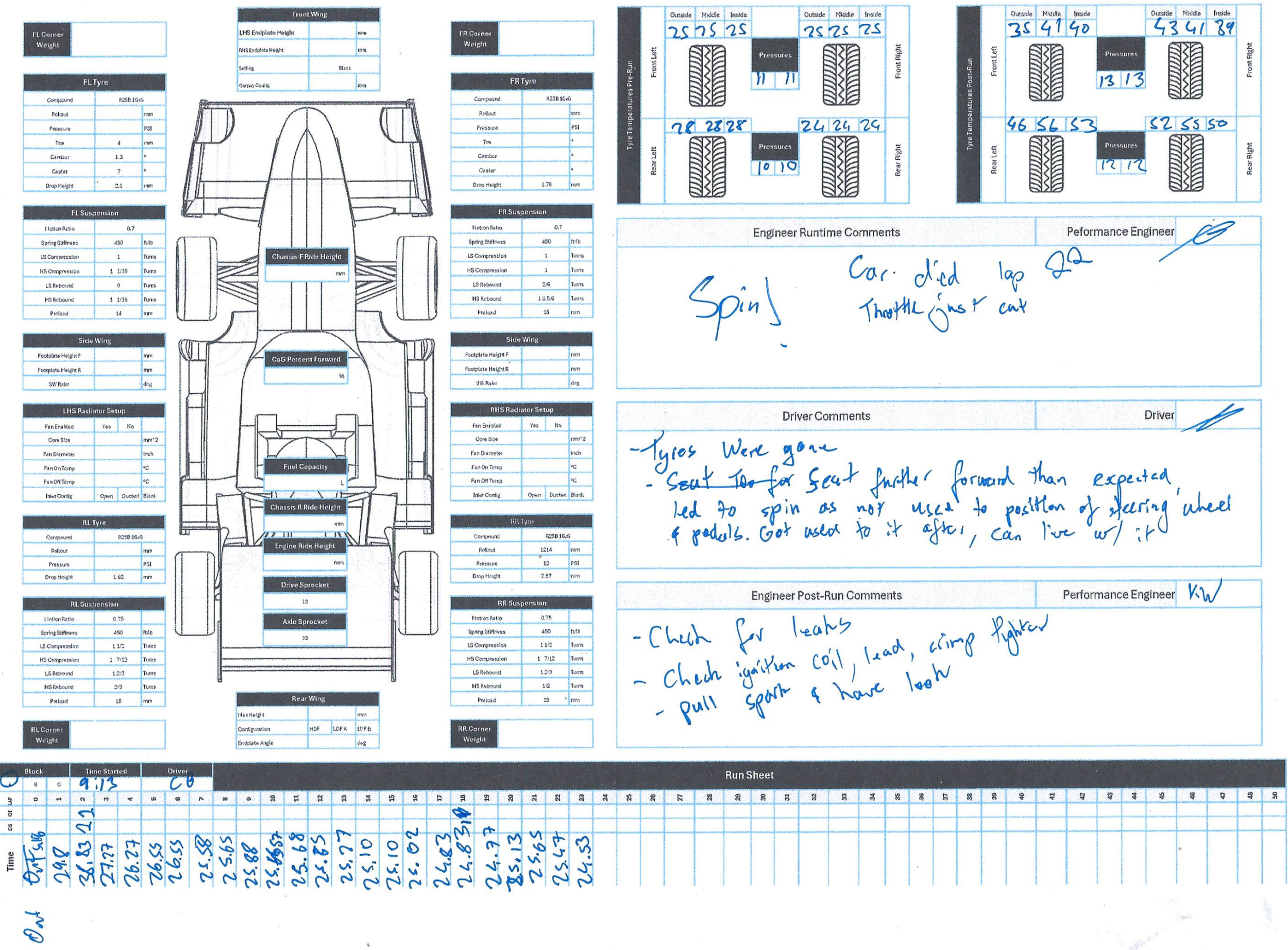
As part of the lead up to the 2026 Formula Student UK competition, we evolved our testing methodology to maximize our on-track time. After looking at examples of professional and grassroots motorsport, I developed a new excel workbook with run plan and run sheet templates, and automated tracking of on track time, and comparison of driver KPI’s.
dRIVER dEVELOPMENT
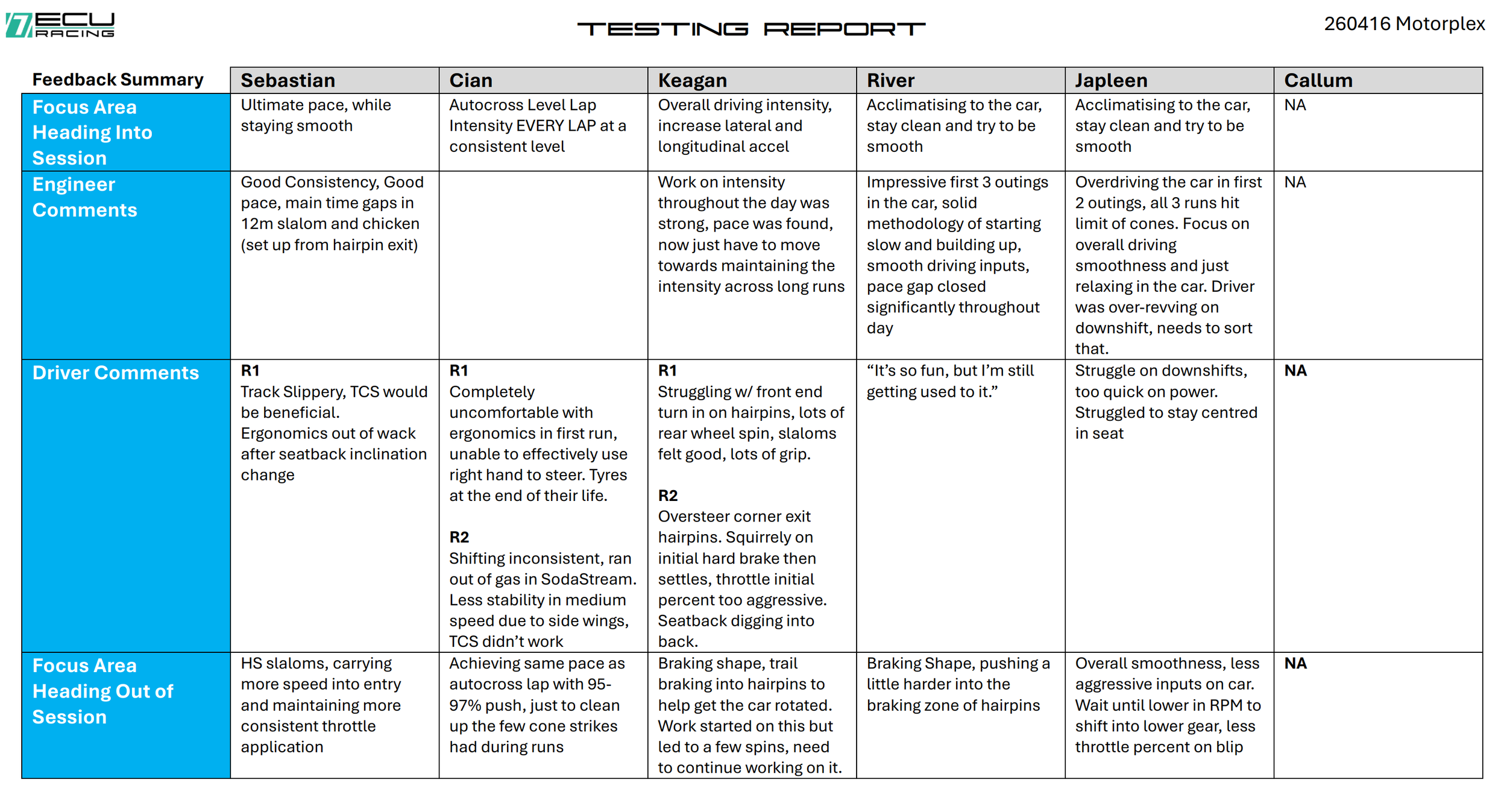
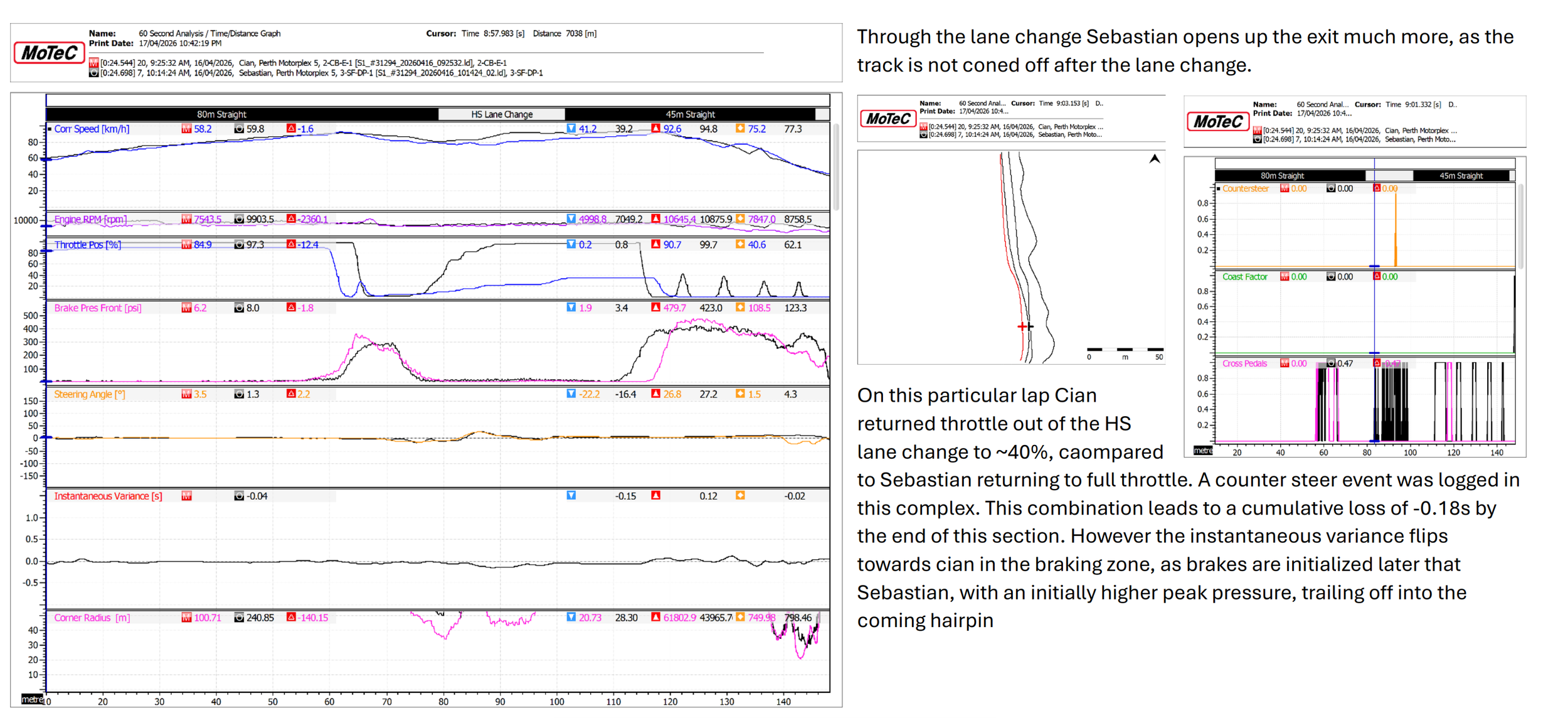
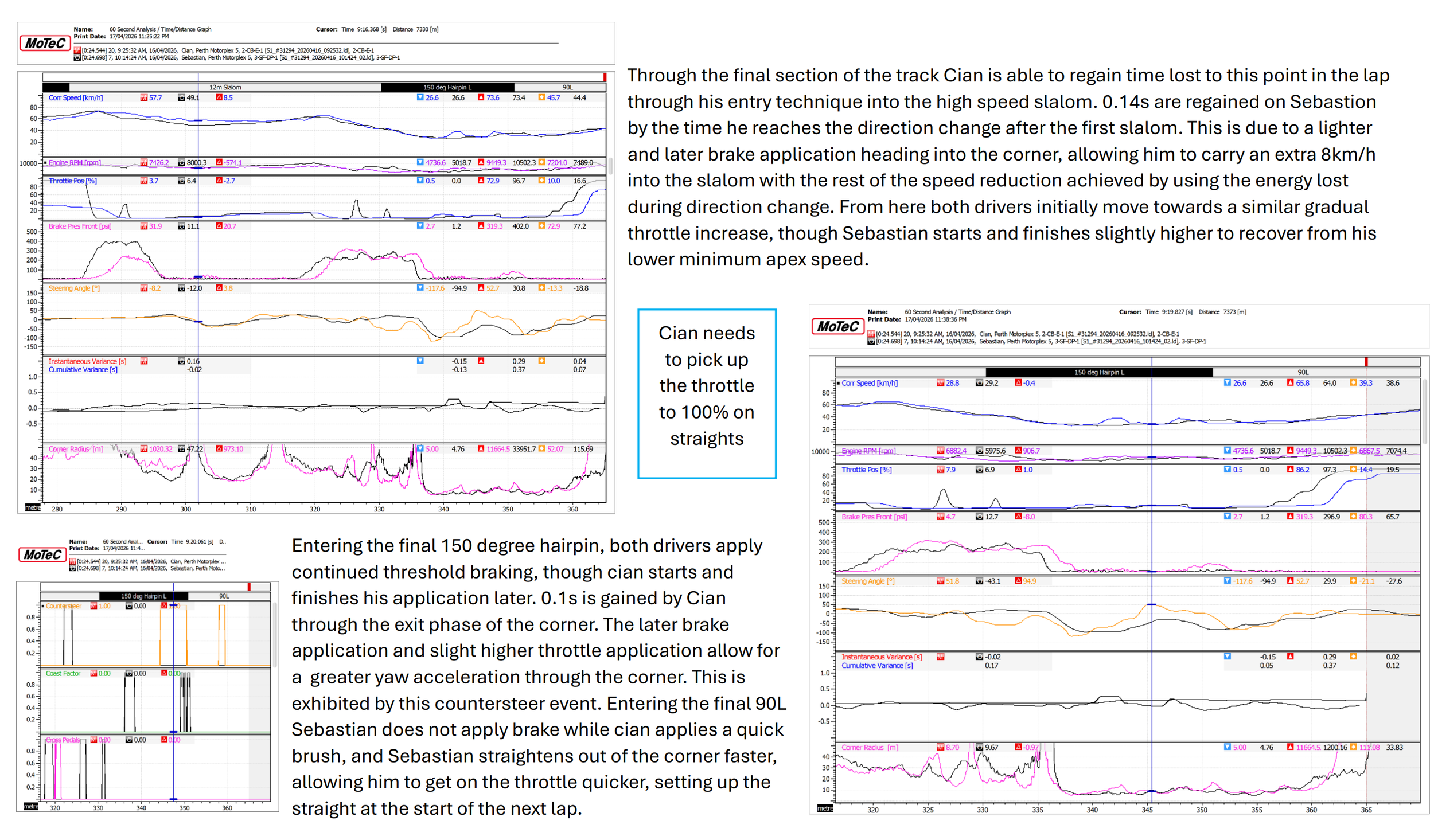
Heading into a session, drivers were given focus areas for the day, with feedback recored at the conclusion of all runs. After the session, new focus areas were prescribed to each driver to either work on in the simulator or during their next outing.
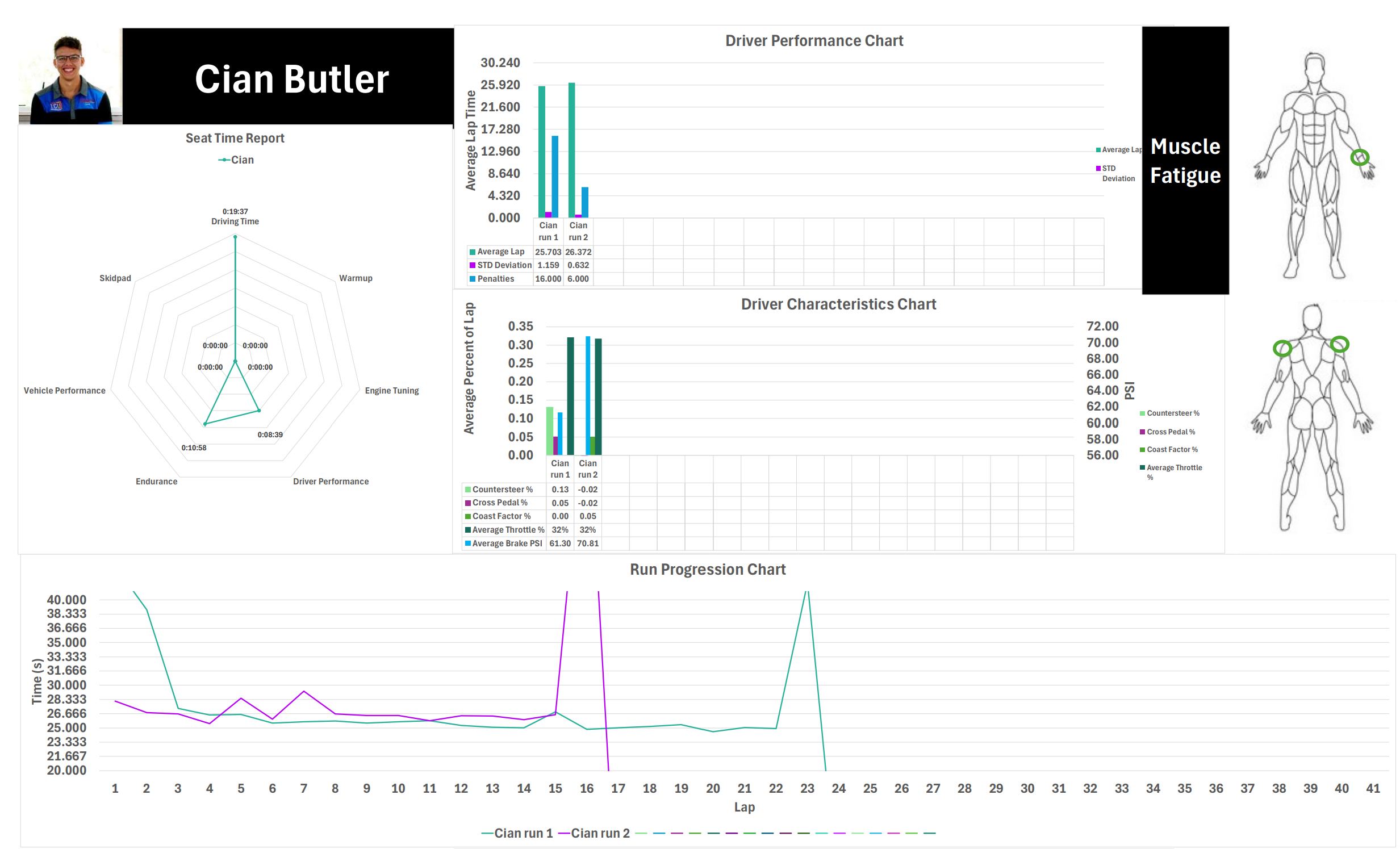
During block B of this particular session, it was my role to provide feedback to each driver on where they could improve, using the motec i2 workspace I’d developed based on my time sim racing. These insights were later captured in a testing report I had written for later review.
oPPORTUNITIES FOR oN tRACK vALIDATION
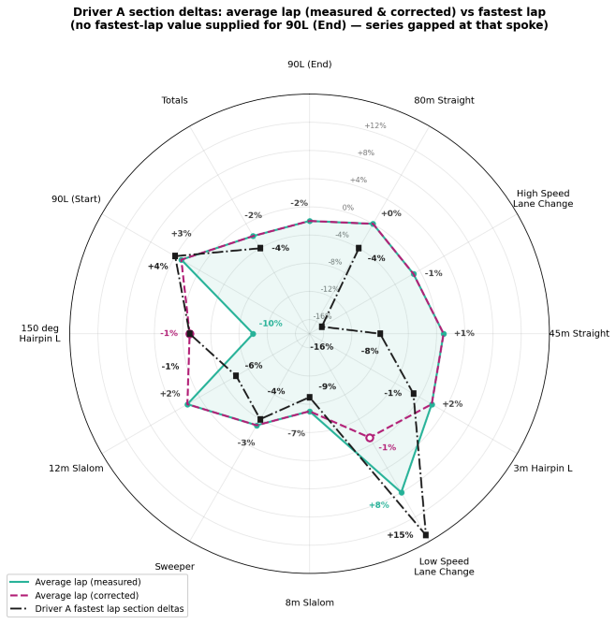
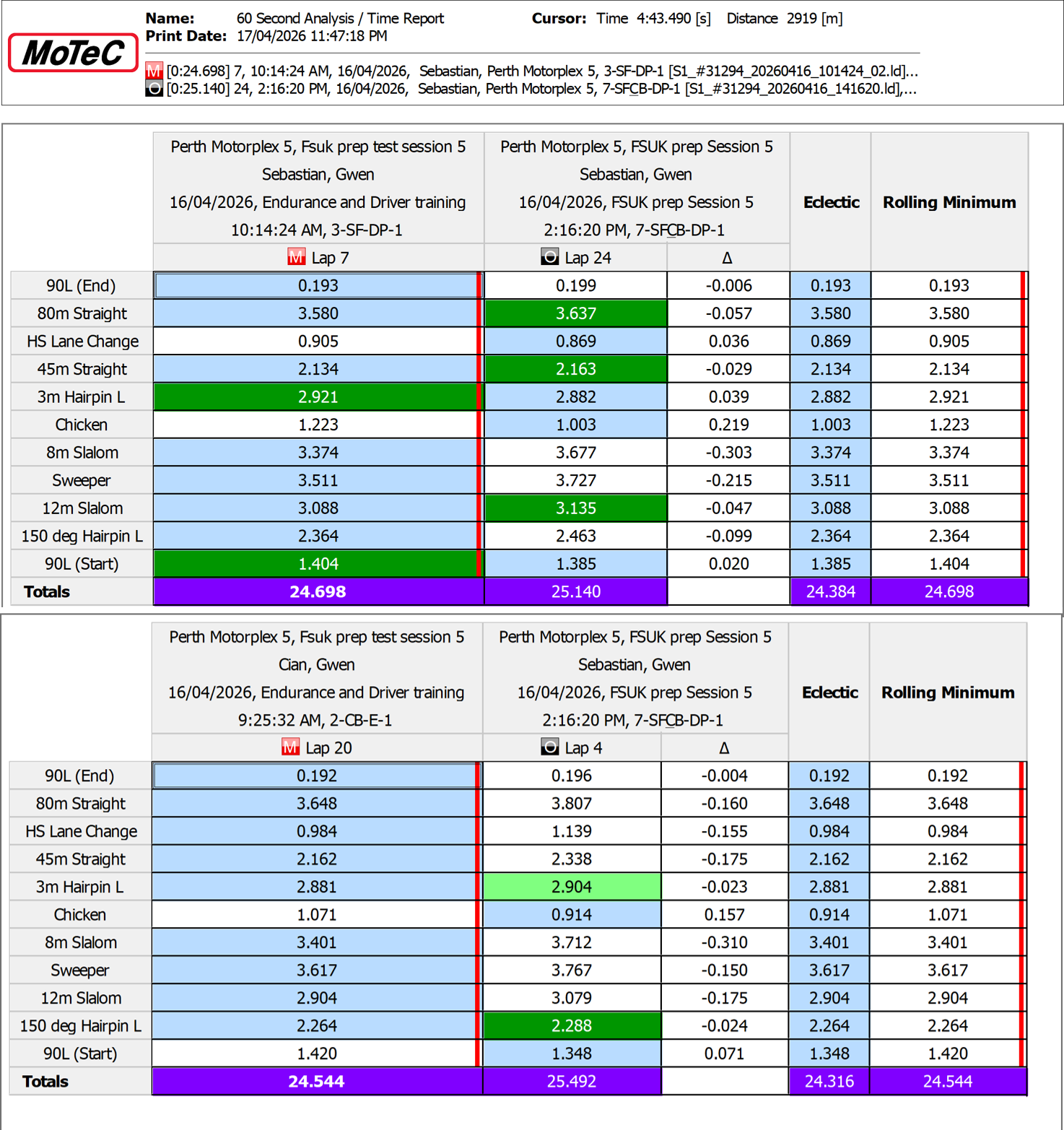
This session provided a unique opportunity to conduct some back to back runs with our aero package. Running 2 sets of drivers to account for different driving styles, we were able to prove the performance gain of our vortex driven ground effect side wing package, which was a huge win for the team given those components were historically a weak area of development for the team.
There were noticeable deltas in the weepers, with both drivers finding significant time here, 0.215s for Driver A and 0.150s for Driver B. An average speed difference of 3.1km/h was again observed for Driver A, and while their 12m slalom didn’t see a large delta, only 0.047s, Driver B’s did with 0.175s gained with side wings.
The average speed difference through this sector was 2.9km/h, with lane changes also being an area of performance gain, seieng a delta of 0.155s, with an average speed difference of 9.6km/h.