Understanding The Performance Envelope
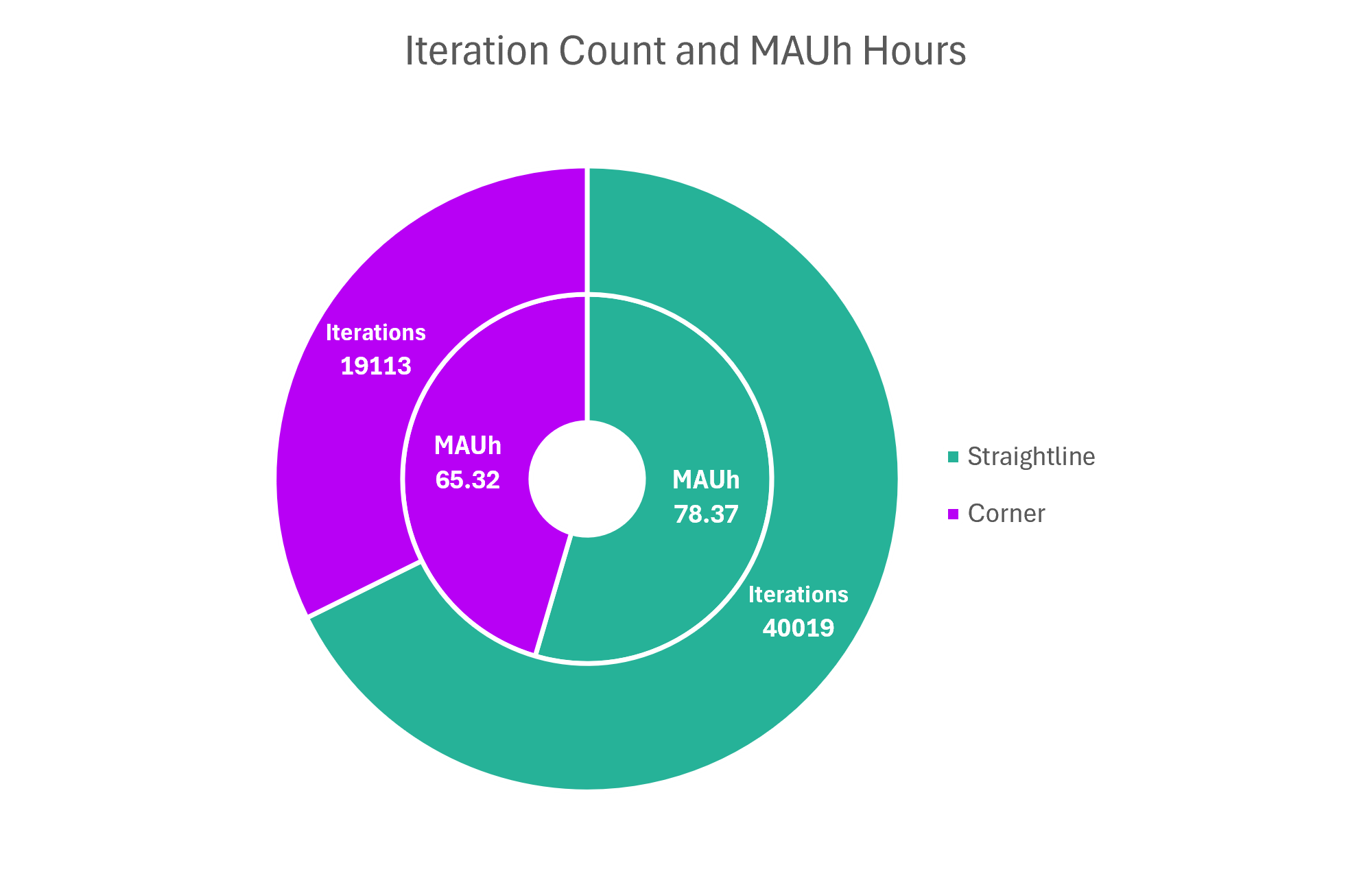
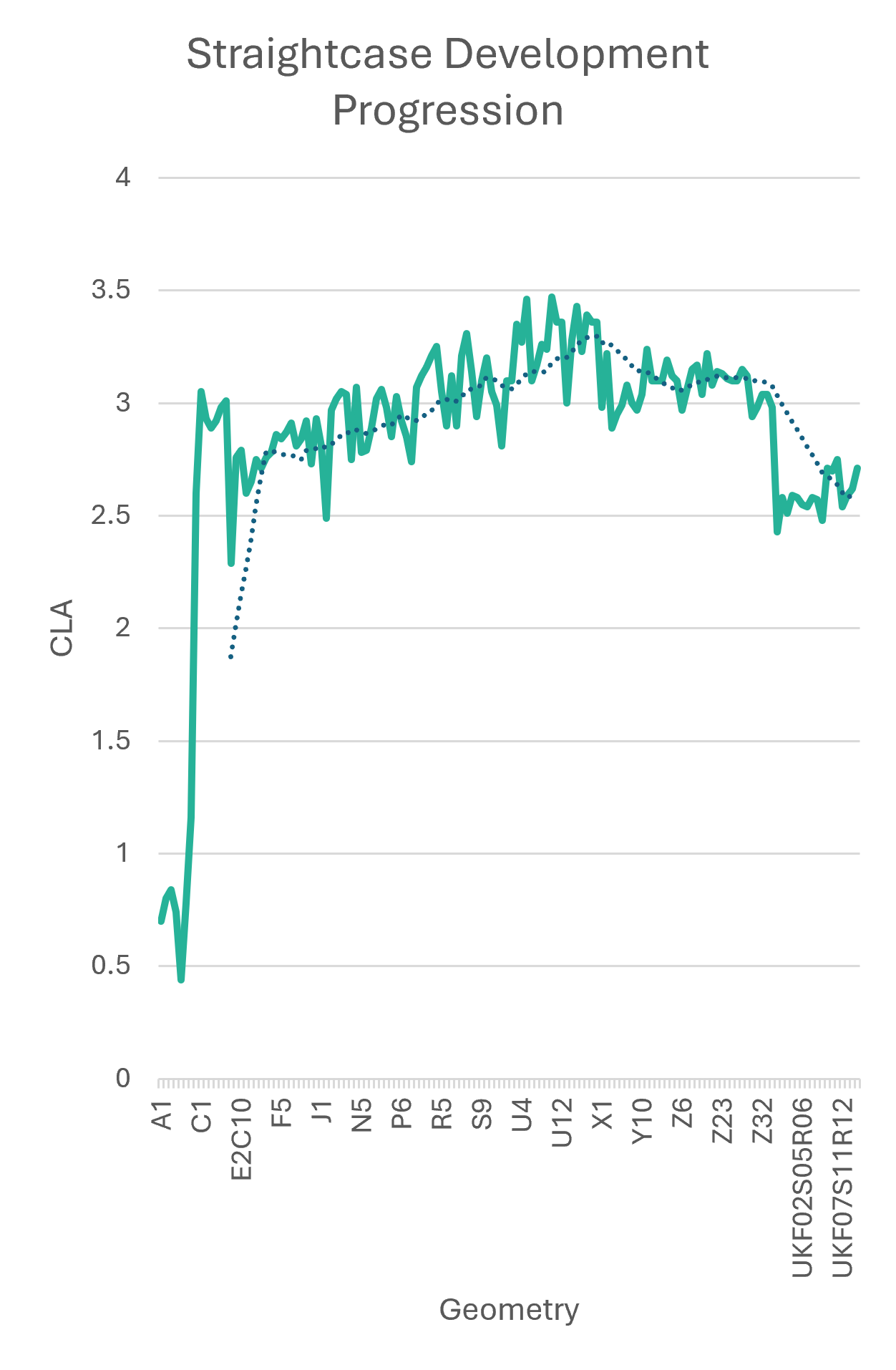
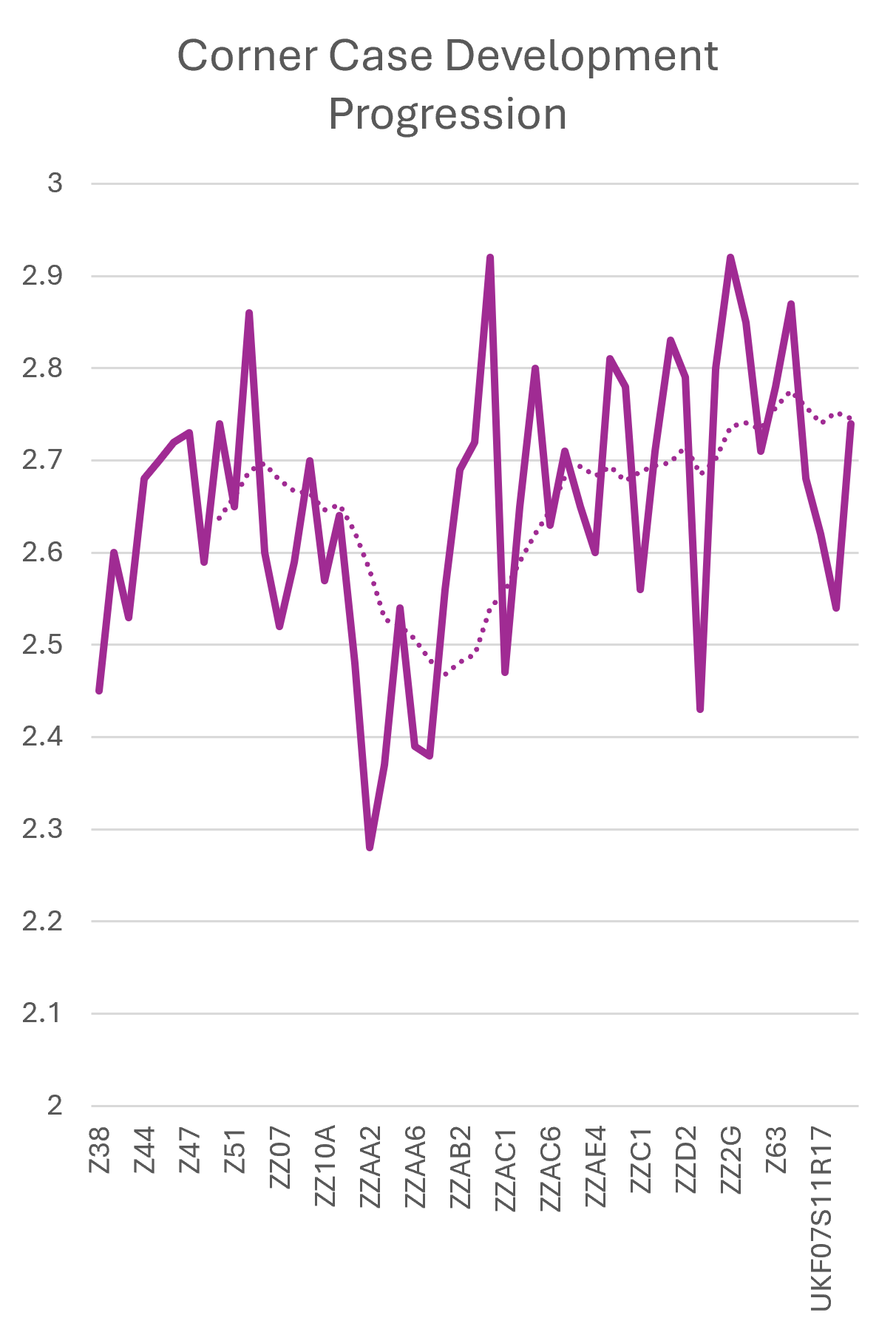
Developing Australia’s first hybrid single seater at Edith Cowan University Racing, I spent just under double amount of compute the combined allocation of the Aston Martin F1 Team ’s 2023 and 2024 allowances would provide. But it’s not about the amount of time you spend in CFD, but how you turn it into vehicle insights. At regular intervals during design, the existing geometry was put through an analysis suite which was used to characterise the effect of different kinematic modes on aerodynamic performance.
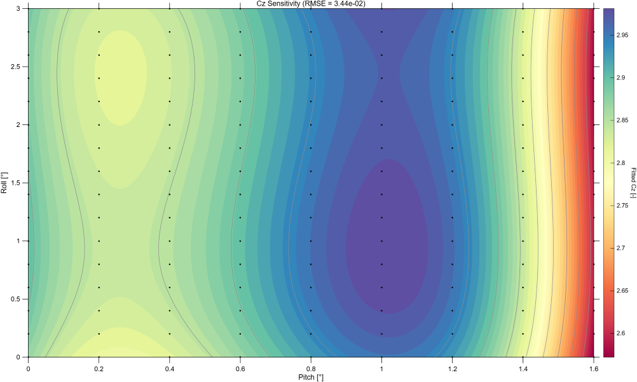
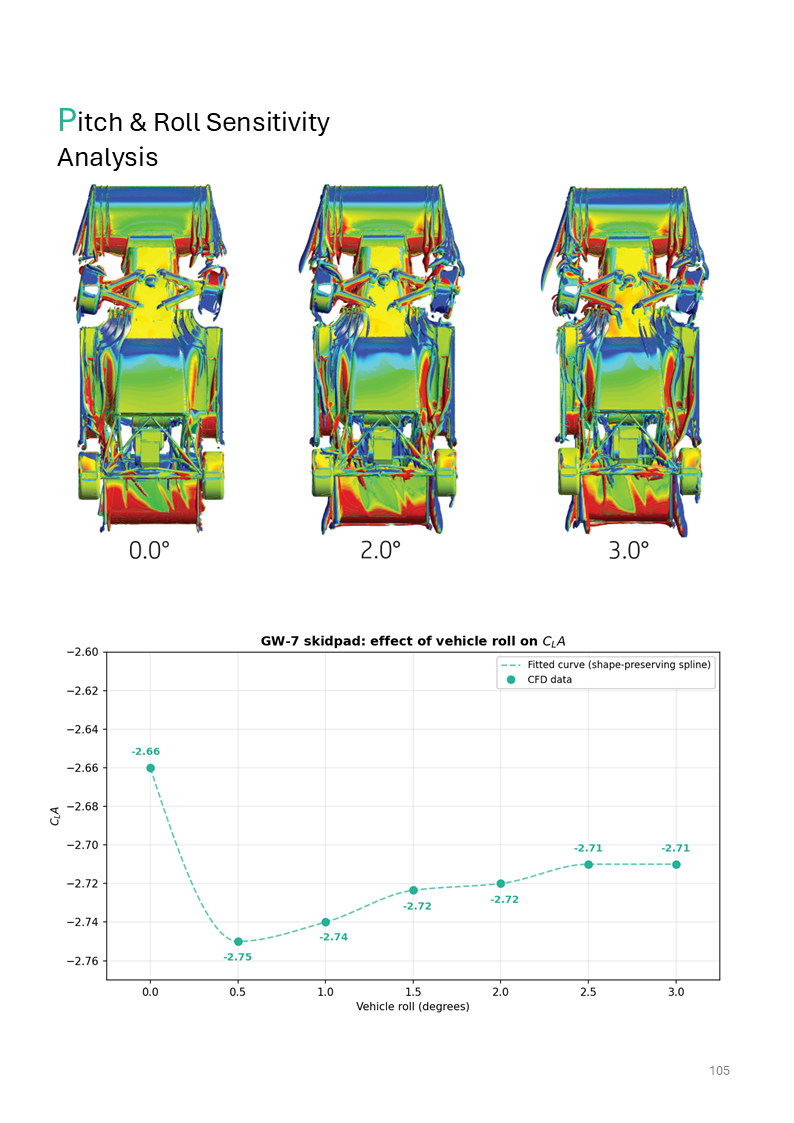
After geometric development of the package ceased with iteration Z65, the final performance envelope of the car was determined using a series of attitudinal simulations to collect data points, generate a polynomial regression, and create a governing equation which from an input pitch and roll angle, a final CLA could be estimated. Pitch simulations were conducted in straight case, as maximum pitch angles would be seen in a braking case. Roll angle effects were simulated in the corner case domain, as maximum roll angles would be seen in this case. This then characterised the “kinematic performance envelope of GW-7/H”, as relating to vehicle attitude.
Discretised Modal Analysis
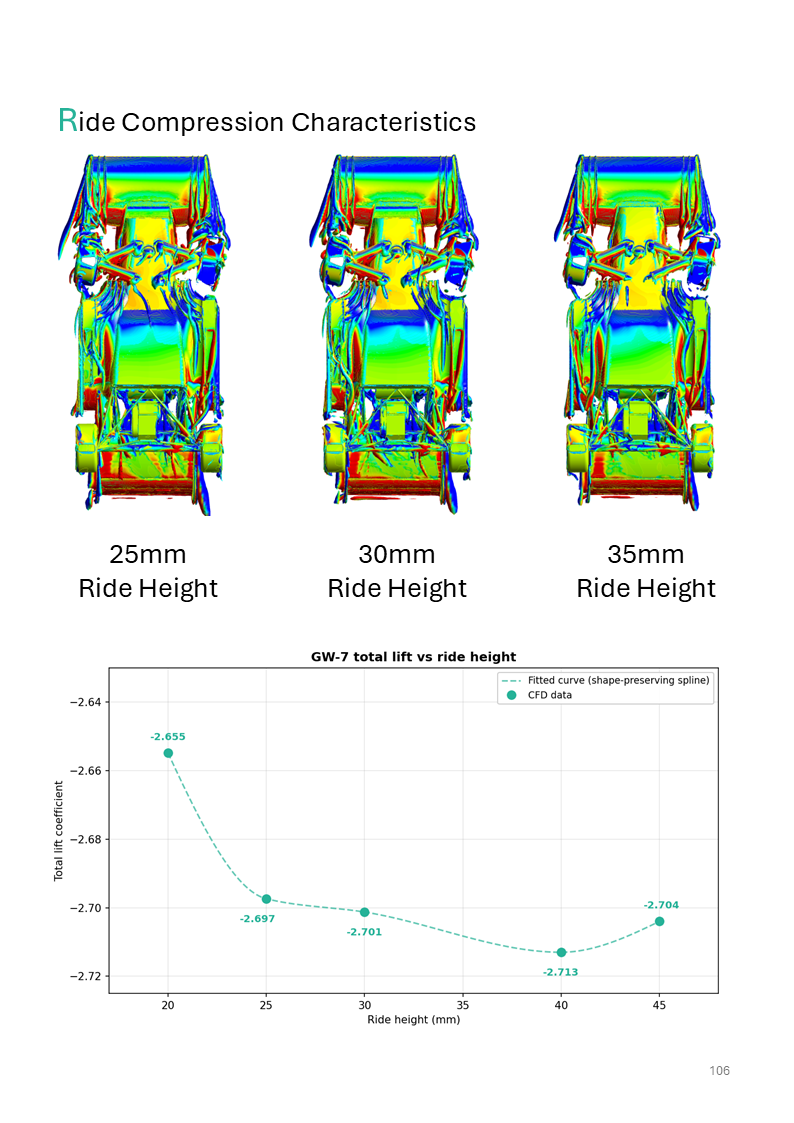
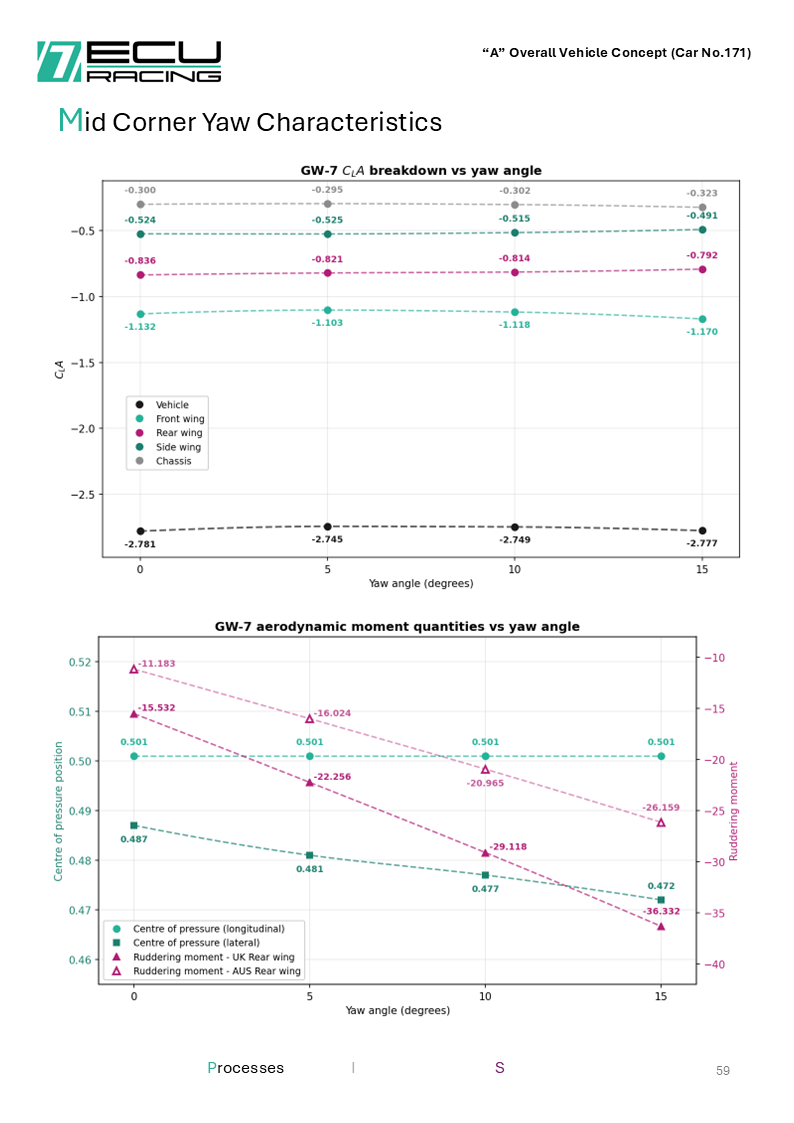
Beyond simply pitch and roll, GW-7 was also analysed in varying ride heights, and mid corner yaw cases, to ascertain the effects of ride compression and oversteer as relating to the racing line. Aiming to ensure a robust performance envelope for the package, the final iteration seen at Formula Student UK had a maximum variation CLA of 0.09 in roll, 0.055 in ride height, and ~0.1 in pitch within achievable attitude.
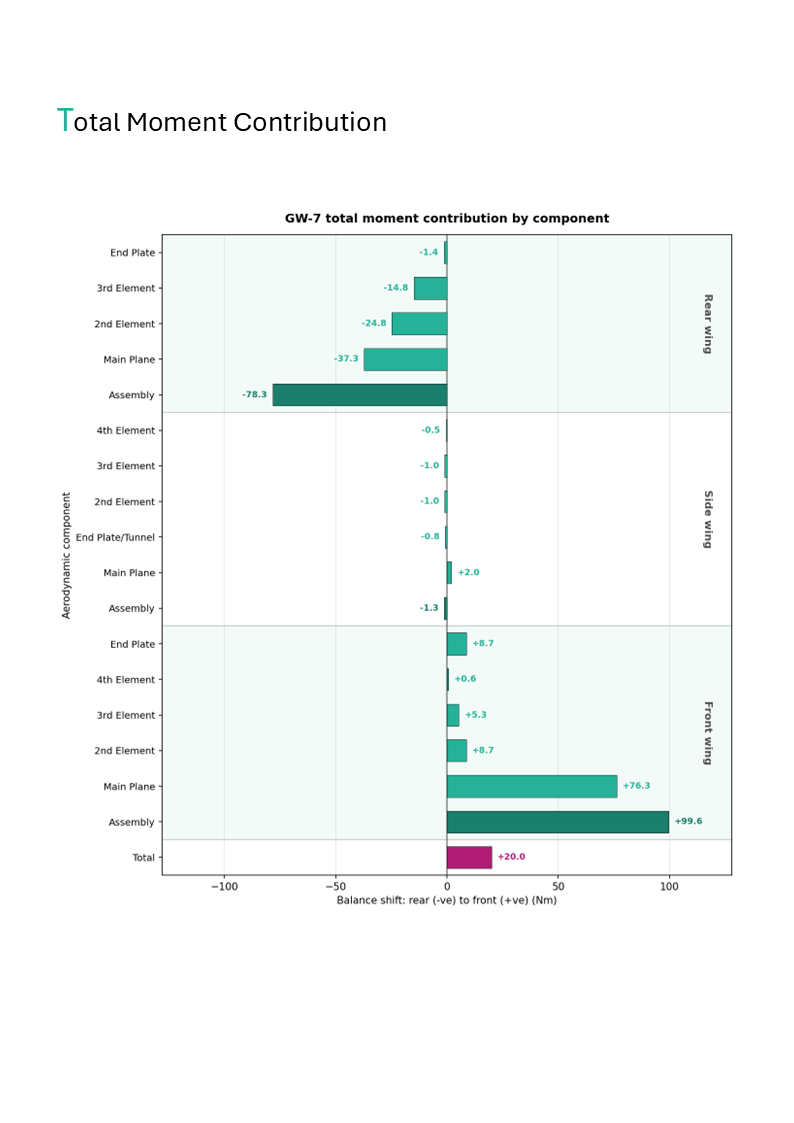
The individual effect of each element on the package was quantified as relating to it’s impact on the longitudinal center of pressure, the goal here being to identify which individual component would have the most effect when attempting to enact vehicle balance changes.
Impact of External Variations in Airspeed (Crosswind Analysis)
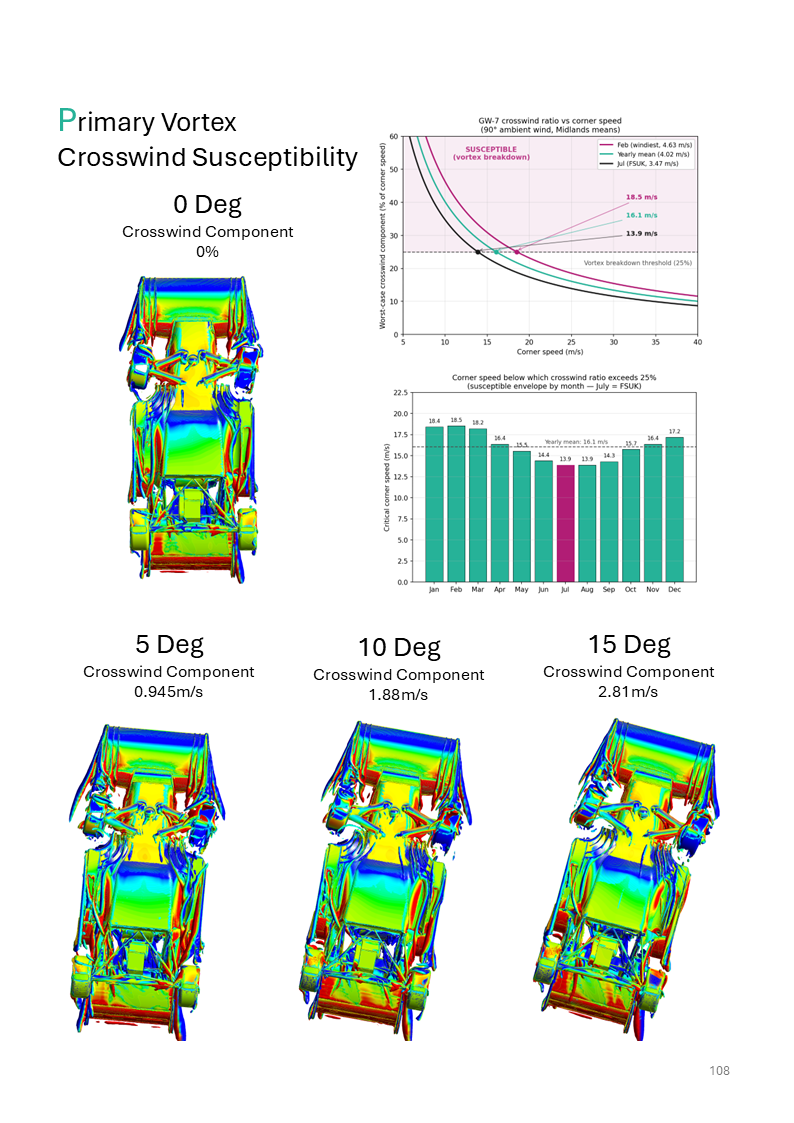
One of my favourite analysis profiles we developed was determining the #crosswind threshold that our side wing primary vortex structures could survive before they began to break down. Comparing this to UK meteorological data for towcester (Silverstone) then lets us figure out at what speeds our aero package will remain effective. With how low the speeds of Formula Student UK are compared to most of the other categories that use aerodynamics, this was a really handy analysis, especially in steady state cornering cases such as skidpad where you’re guaranteed to hit a 90 degree crosswind 4 times per run, at a vehicle speed of only 10-12m/s. It’s always handy to be able to tell your drivers based on how windy it is whether the car might feel like it’s changing under them or not!
The Framework for validation
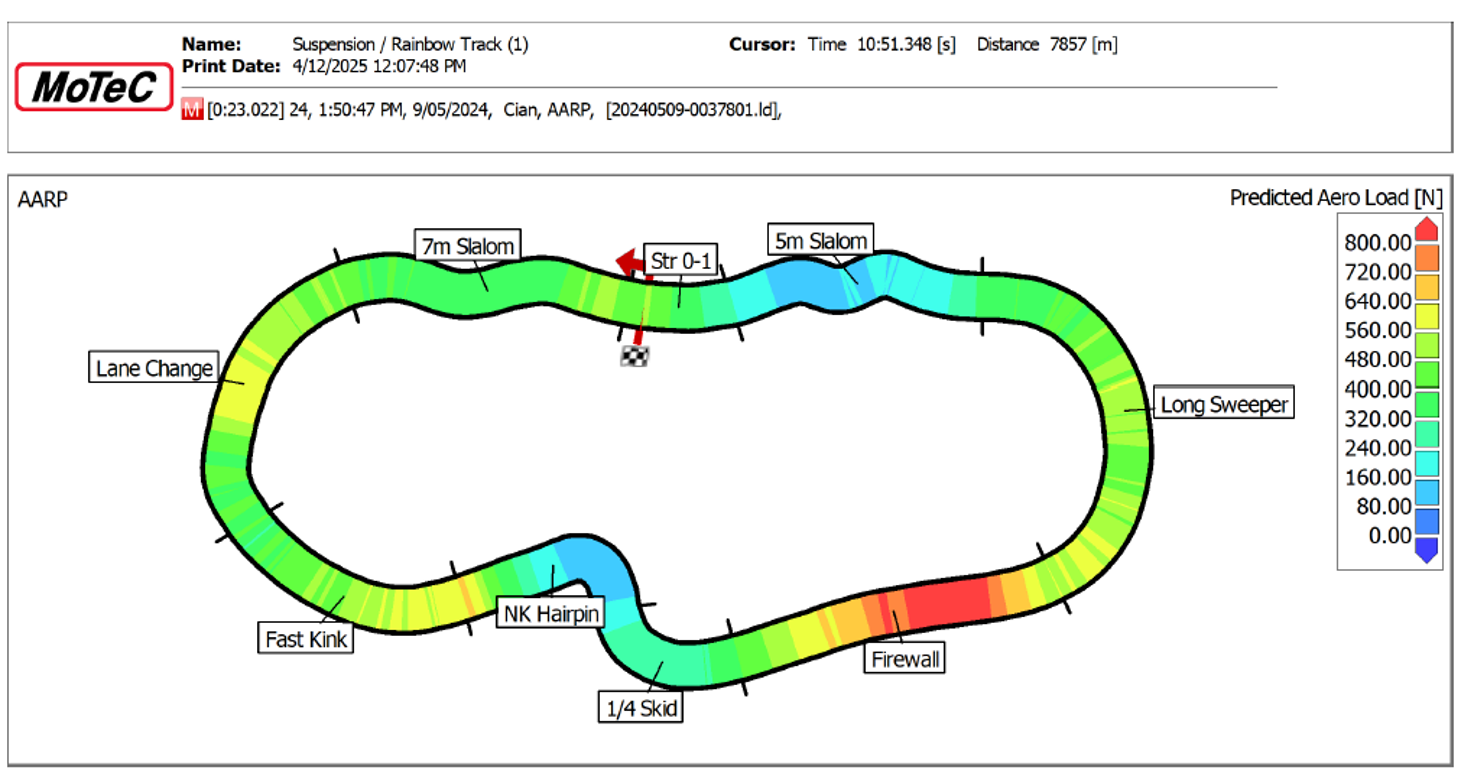
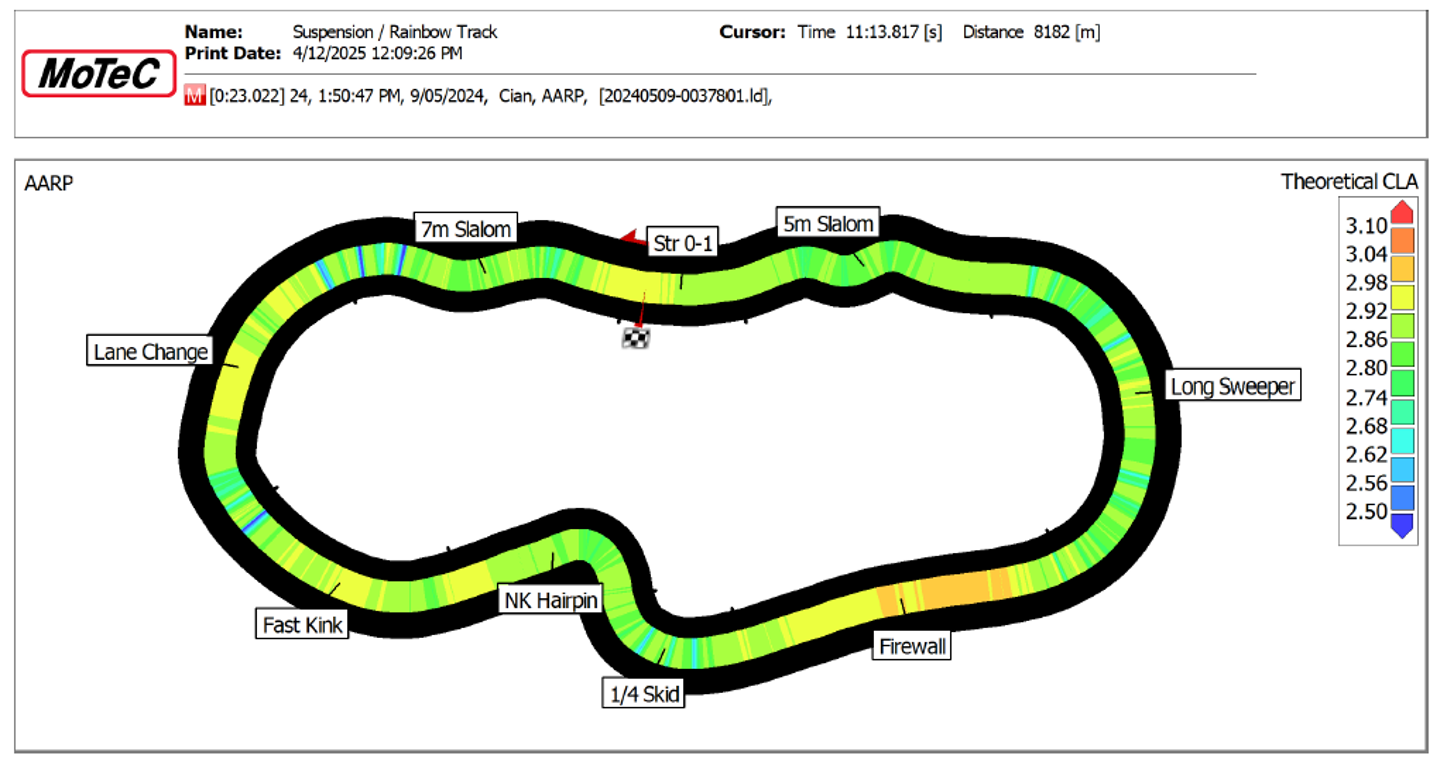
As a final stage of envelope characterisation, the modal polynomials developed were implemented into motec math channels, allowing for CLA and predicted aero load outputs following the acquisition of on track data. This can either be used for validation against post-processed linear potentiometer/strain guage data, or against live telemetry.